

The best things to buy in Morocco are the ones you will actually use at home: Bacha Coffee from Marrakech, green tea for Moroccan mint tea, argan oil from the Souss, beldi soap for a home hammam, hand-painted ceramics from Safi and Fes, akker fassi lip and cheek colour, spices such as ras el hanout and Taliouine saffron, and a hand-woven wool rug from the Middle Atlas.
| Coffee | Bacha Coffee, Dar el Bacha, Marrakech |
|---|---|
| Tea | Gunpowder green tea, a teapot and glasses |
| Skin | Argan oil and beldi soap |
| Table | Hand-painted ceramics from Safi and Fes |
| Kitchen | Ras el hanout, Taliouine saffron, preserved lemons |
| Floor | A hand-woven wool rug from the Middle Atlas |
Coffee for the morning.
Tea for the afternoon.
Oil for the kitchen.
Soap for the hammam at home.
Ceramics for the table.
A red bowl for the dresser.
Spice for the rest.
A rug for the floor.

Bacha Coffee
Coffee for the morning.
Bacha Coffee’s home is the Dar el Bacha palace in the Marrakech medina. Its shelves hold single-origin and blended beans in the famous yellow tins, and they grind them to order at the counter, so you leave with coffee that suits the way you brew at home.
So every morning feels like a morning in Morocco
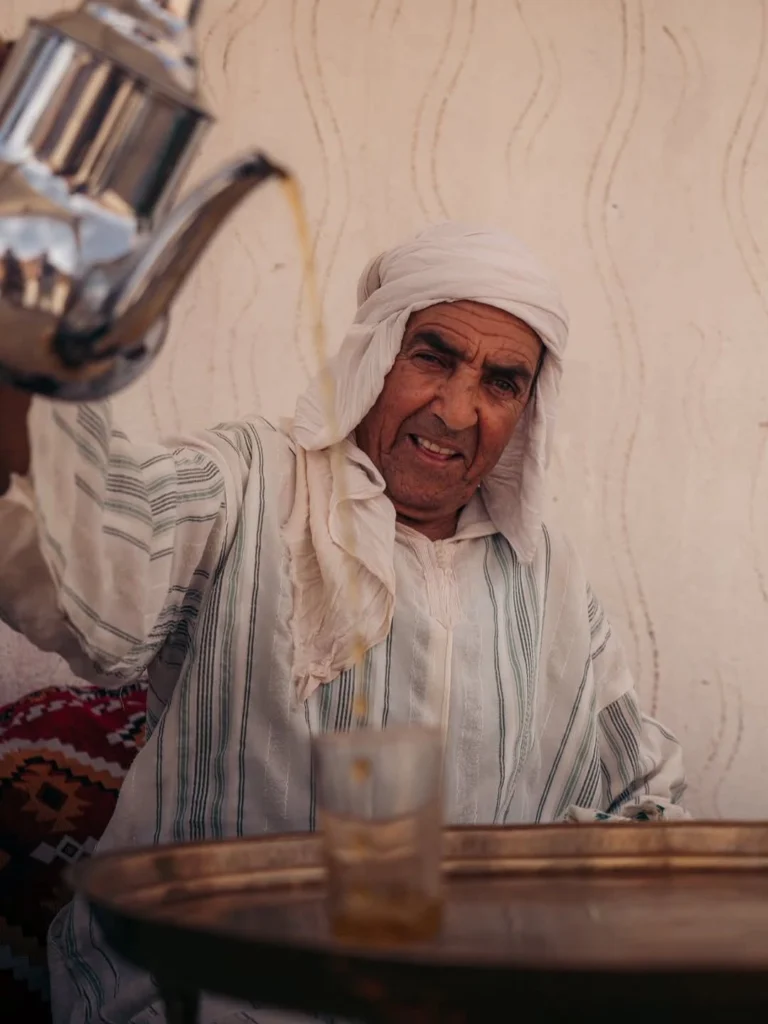
Mint tea
Tea for the afternoon.
Moroccan mint tea is made with gunpowder green tea, fresh mint and sugar, poured from high so it foams in the glass. Take home a bag of green tea, a teapot and a set of glasses from the souk, and the ritual comes with you.
Pour from high, serve in small glasses

Argan oil
Oil for the kitchen, and for your skin.
Argan trees grow in the south-west, and the oil is pressed from their kernels, often by women’s cooperatives in the Souss. Cosmetic argan oil is the one for skin and hair: a few drops at night is all it takes. Toasted culinary argan oil has a nutty taste and goes on bread, salads and couscous. Moroccan skincare goes well beyond the oil too, with scrubs and body creams whose scent stays in the room after you leave it.
The one bottle you will refill at home
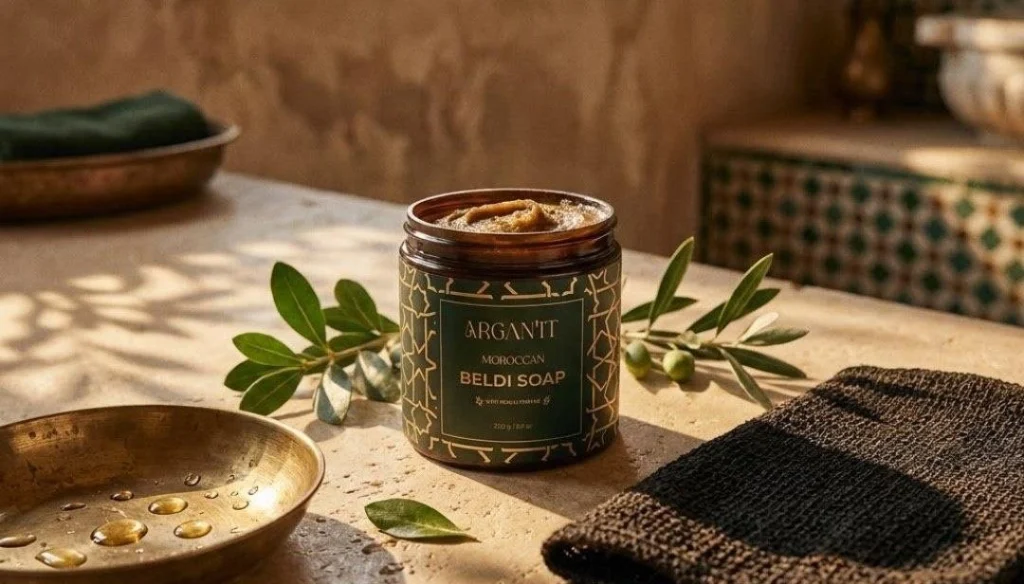
Beldi soap
Soap for the hammam at home.
Beldi soap is a soft, dark paste made from black olives cured with potash. Spread it on warm, damp skin, leave it for a few minutes, then scrub it off with a kessa glove. Your skin comes out smoother than with any scrub you own: it is the hammam, packed into a jar.
Ghassoul clay is sold dry: mix it with water

Ceramics
Ceramics for the table.
Plates, bowls and tagines are painted by hand, one piece at a time, so no two come out the same. Use them to set the table, or put them on a shelf and let them become part of the room. It is the gift people remember.
For food, check the base is stamped lead-free

Akker fassi
A red bowl for the dresser.
Akker fassi is a small clay bowl tinted with poppy. Wet a fingertip, touch the colour and use it on your lips and cheeks. You will find it at the herbalists of Fes, on the same shelf as kohl and rose water.
One bowl for lip and cheek colour

Spices
Spice for the rest.
Ask for ras el hanout and watch the stall blend it in front of you. Saffron comes from around Taliouine, in the south. Add orange blossom water and preserved lemons, and you have the base of Moroccan cooking.
Good to know
Buy saffron as threads, not powder · Pack liquids and jars in your checked bag
The whole kitchen smells of the souk
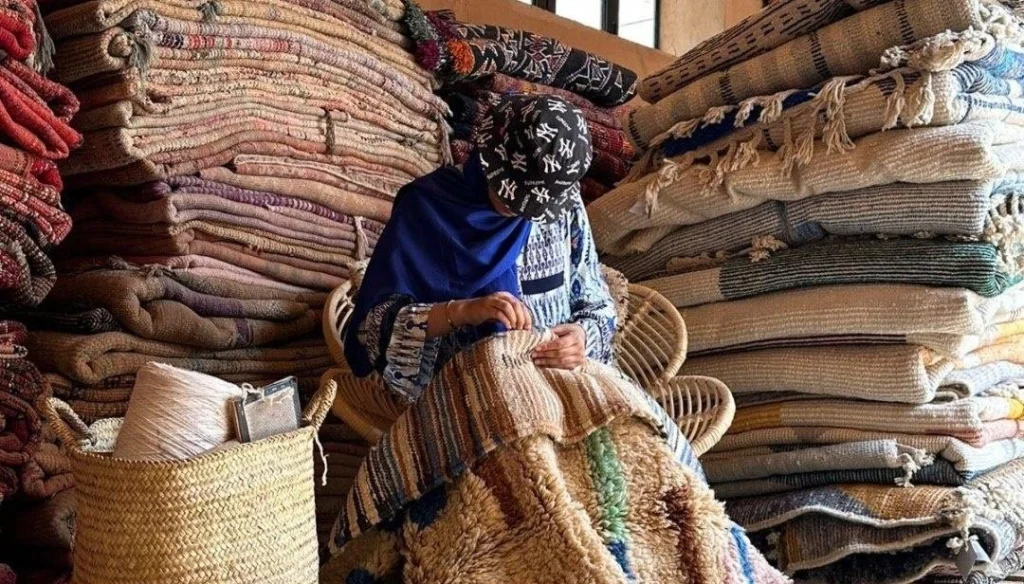
Wool rugs
A rug for the floor.
Rugs are woven by hand in the mountains, often over months, and never to the same pattern twice. The wool is left undyed or coloured with plants, and a good rug will outlive everything else you bring home.
One rug changes the whole room
There is no best thing to bring back, only the one you will use.
Tell us which city you are visiting and we will send you the addresses.